Guides 2 min read
The right temperature and fresh air directly affect poult growth and health. Weekly heat reduction and minimum ventilation explained.

Heat and ventilation can't be managed separately. Sealing the house to keep heat in spoils the air; opening it up too much chills the poults. The goal is to keep the two in balance.
Temperature in the first days
With spot brooding, the temperature at poult level under the brooder is usually kept at around 35–38 °C in the first days, while areas further away are cooler so poults can choose their spot. In whole-house heating systems, the ambient temperature is lower but even. Follow the guide for your genetic line.
Weekly reduction
As poults feather out, they need less heat. Temperature is usually lowered by a few degrees each week, approaching grower conditions by weeks five to six. Reductions should be gradual, never sudden.
Read the poults, not the thermometer
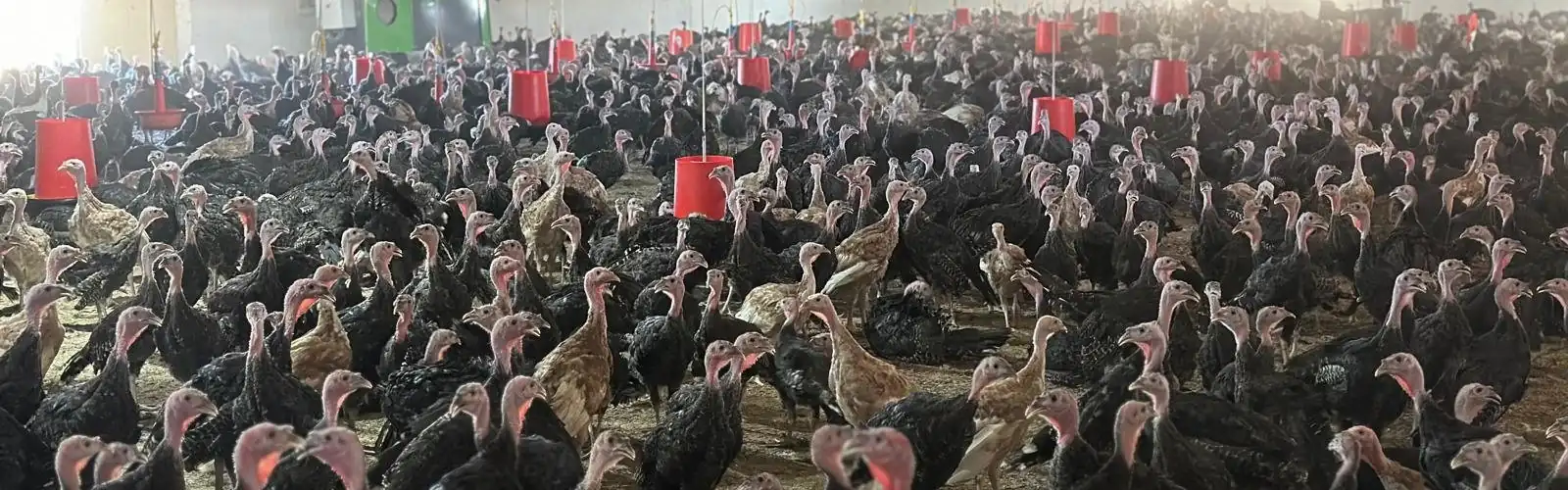
Measure temperature, but decide based on behavior. An evenly spread, active, quiet flock is comfortable. Constant chirping and crowding are signs of cold.
Minimum ventilation
Even in cold weather, some fresh air must enter the house. Minimum ventilation removes moisture, carbon dioxide and ammonia. Direct incoming air along the ceiling, not straight onto the birds.
Ammonia and moisture
If you can smell ammonia when you walk in, the level is already high. Ammonia irritates the airways and eyes and slows growth. Wet litter is the main source: fix leaking drinkers immediately and replace wet patches.
For questions about raising poults, contact our technical team.


