Guides 2 min read
Raising grower turkeys pays off when it is well planned. Basics on housing, feeding, raising by sex and keeping records.

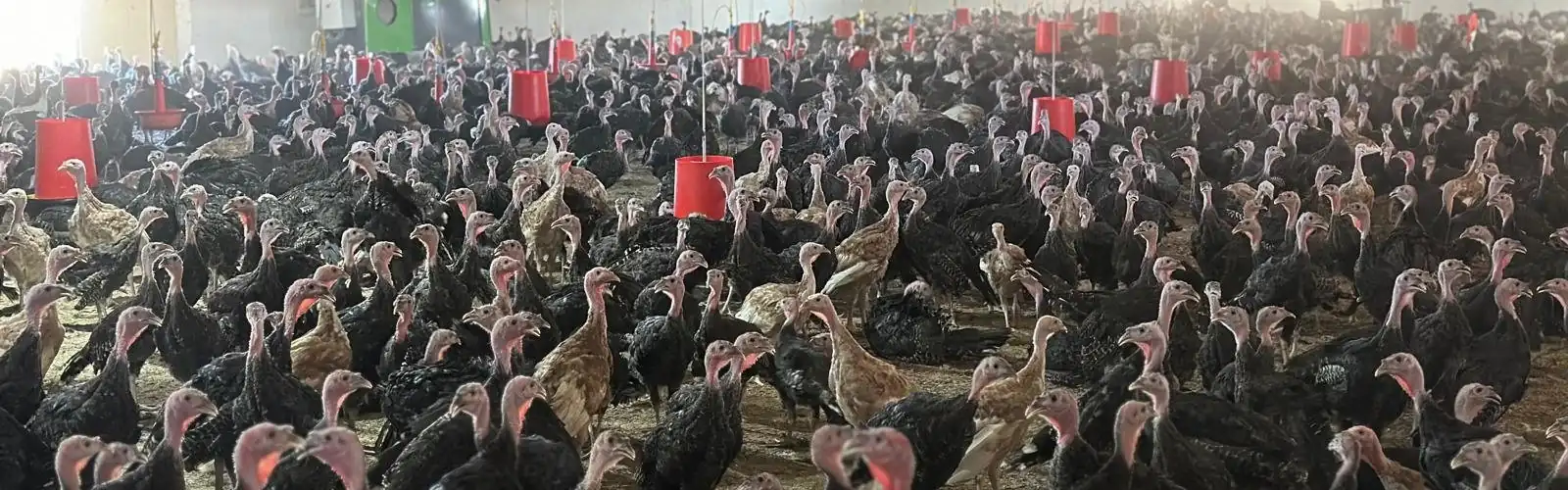
Raising grower turkeys means taking day-old poults through to slaughter weight. Because the cycle is long, planning before you start is worth far more than corrections along the way.
Housing and equipment
The house should be well insulated, with controllable ventilation, and easy to clean. Plan feeder and drinker numbers around flock size, and adjust their height as the birds grow. Stocking density should follow regulations and welfare rules.
Phase feeding
Poults need a high-protein starter feed in the first weeks. As they grow, they move to grower and finisher feeds with lower protein levels. Spread each feed change over a few days, and make sure clean water is always available.
Toms and hens
Toms and hens grow at different rates and go to slaughter at different ages. Hens are usually processed earlier, toms later and at heavier weights. That is why many farms raise the sexes in separate pens, which simplifies feeding and slaughter planning.
Leg health and welfare
Leg problems are common in fast-growing turkeys. Dry litter, a balanced diet and enough space help protect leg health. An environment where birds can move around, with daylight or suitable lighting, improves both welfare and performance.
Keep records
Record daily feed and water intake, mortality, weekly weights, and all medication and vaccination. These records help you spot problems early and plan the next cycle better.
Our team can help you plan your poult supply and delivery schedule for your grower flock.


